Why Most Investors Sell at Exactly the Wrong Time
The biggest threat to your returns usually isn't the market. It's the very human urge to act when acting hurts most.
On this page
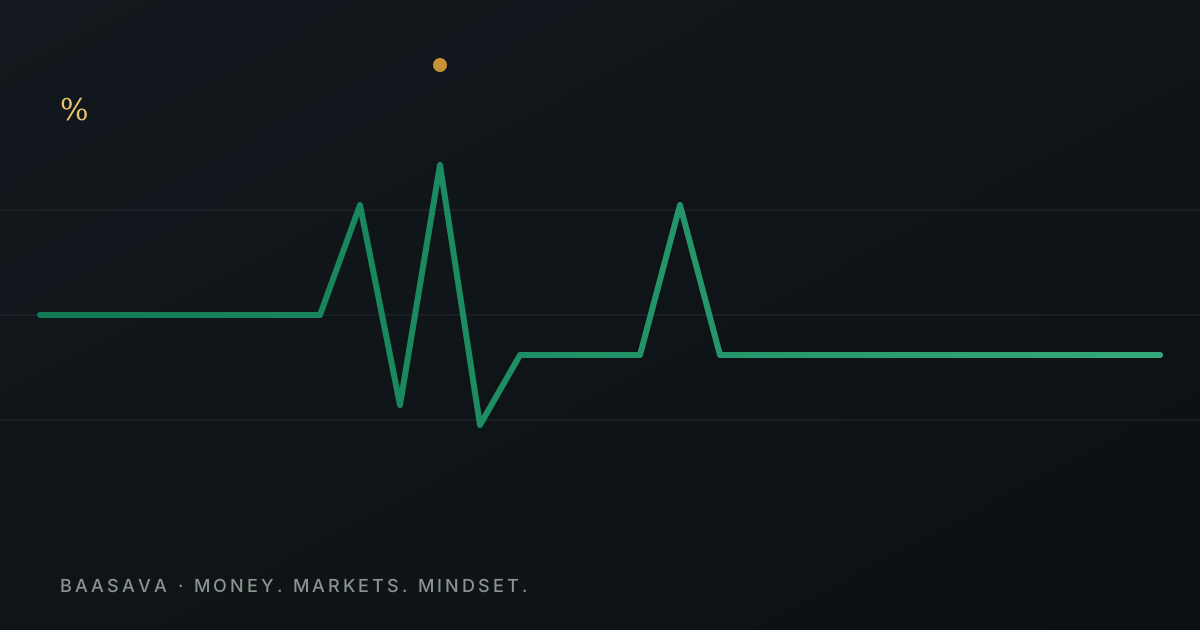
Here's a pattern as old as markets themselves: prices fall, fear rises, investors sell — and then, often, prices recover without them.
It happens to smart people. Repeatedly. The reason isn't stupidity. It's wiring.
The emotion behind the mistake
Behavioural research keeps finding the same thing: losses hurt more than equivalent gains feel good. So when a portfolio drops, the discomfort is real and urgent, and the brain reaches for the one action that seems to stop the pain — selling.
The trouble is that markets don't fall in a straight line and then politely warn you before recovering. The sharpest rebounds often come right after the scariest declines, when sentiment is worst.
Why timing the exit fails
To win by selling, you'd need to be right twice: once to get out near the top, and again to get back in near the bottom. Almost nobody manages both, consistently. Meanwhile, the cost of being out during a few powerful up-days is enormous.
Designing around your own psychology
- Write your plan down while calm — your asset mix and what you'll do in a fall (usually: nothing, or keep investing).
- Automate contributions so investing continues on autopilot through the scary periods.
- Right-size risk. If a drop would make you panic-sell, you were probably taking more risk than you can actually live with.
Disclaimer. Content published on Baasava is for educational and informational purposes only and should not be considered investment, financial, tax or legal advice. Markets carry risk. Readers should do their own research and consult an appropriately qualified professional before making financial decisions.