The ₹1 Crore Retirement Illusion
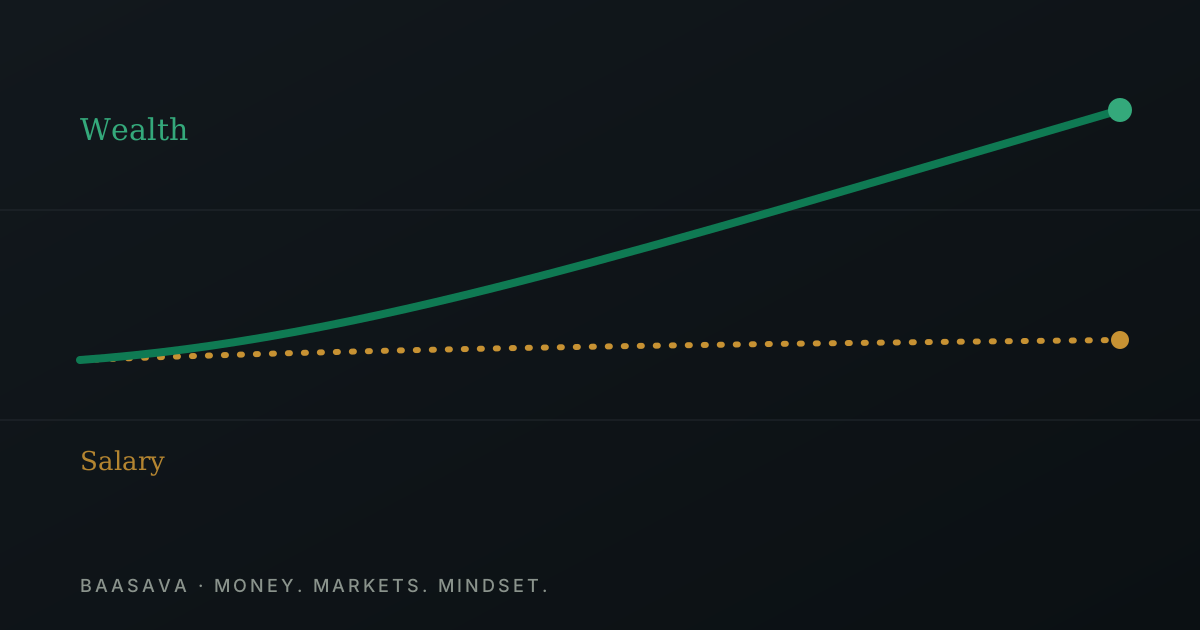
₹1 crore sounds like enormous wealth. But inflation, lifestyle and withdrawal rates can quietly change what that number actually means.
On this page
For a lot of people, ₹1 crore is the number. It's the figure that shows up in daydreams and WhatsApp forwards alike — the point at which you've supposedly "made it."
The problem isn't the number. The problem is what we imagine it can do.
Why the number feels bigger than it is
Large numbers trigger a feeling of safety. But a corpus is not spending money — it's an income-producing machine. The relevant question is how much you can withdraw from it every year without running out.
A common rule of thumb is that you can withdraw a modest percentage of your corpus each year, adjusted for inflation, and expect it to last a few decades. Apply a conservative rate to ₹1 crore and the annual income it produces may be far less than people expect — and that's before we account for prices rising every year.
Inflation is the real opponent
Here's the uncomfortable part. If prices roughly double over a couple of decades — which is what steady inflation does — then the lifestyle ₹1 crore buys today needs meaningfully more rupees to buy the same thing later.
That is why two people with the identical ₹1 crore can have completely different outcomes. One retires into a modest, paid-off life. The other retires into a city, a lifestyle, and three more decades of rising prices.
What actually matters
- Your expenses, not your corpus, are the anchor. Wealth is relative to what your life costs.
- Time horizon. Funding 15 years is a very different problem from funding 35.
- Withdrawal discipline. The order and size of withdrawals — especially early on — shapes how long money lasts.
Disclaimer. Content published on Baasava is for educational and informational purposes only and should not be considered investment, financial, tax or legal advice. Markets carry risk. Readers should do their own research and consult an appropriately qualified professional before making financial decisions.